







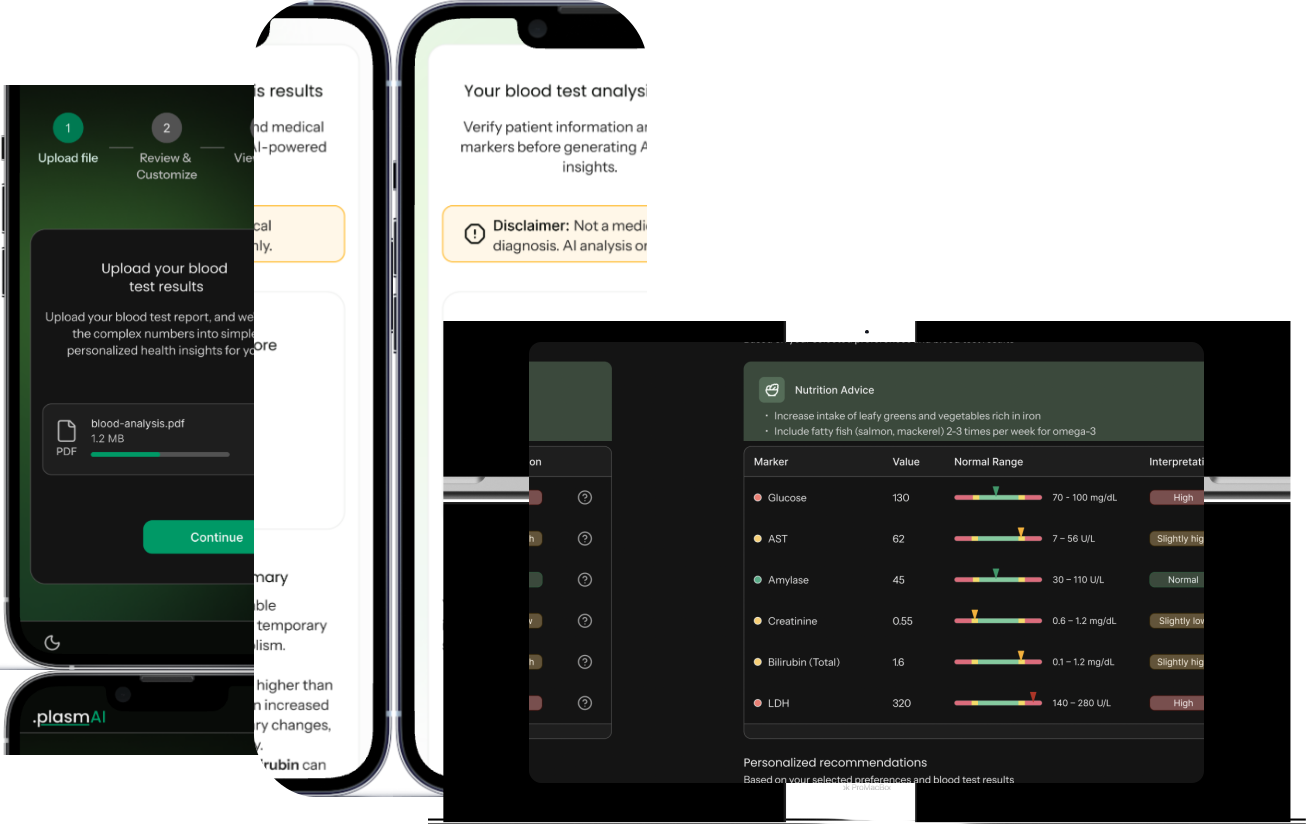
The Lab Results Analyzer is an intelligent solution designed to help patients interpret their laboratory test results and understand whether they need to consult a doctor. And if so, which medical specialist to contact. It provides AI-driven analysis and medical data interpretation with clear, personalized results based on uploaded lab reports.
A patient uploads a lab report (PDF, image or integrated lab data). The system automatically extracts biomarkers, standardizes units and reference ranges, and presents the results in a clear, human-readable format. Instead of raw numbers, users see whether each result is within or outside the normal range; a simple explanation of what the value means; guidance on whether a doctor visit is recommended and which specialist to contact.
The goal is not medical diagnosis, but clear medical reports with actionable health results.
By explaining complex laboratory data into clear conclusions, the Lab Results Analyzer helps patients make informed decisions and reduces unnecessary clinic visits caused by uncertainty rather than symptoms.
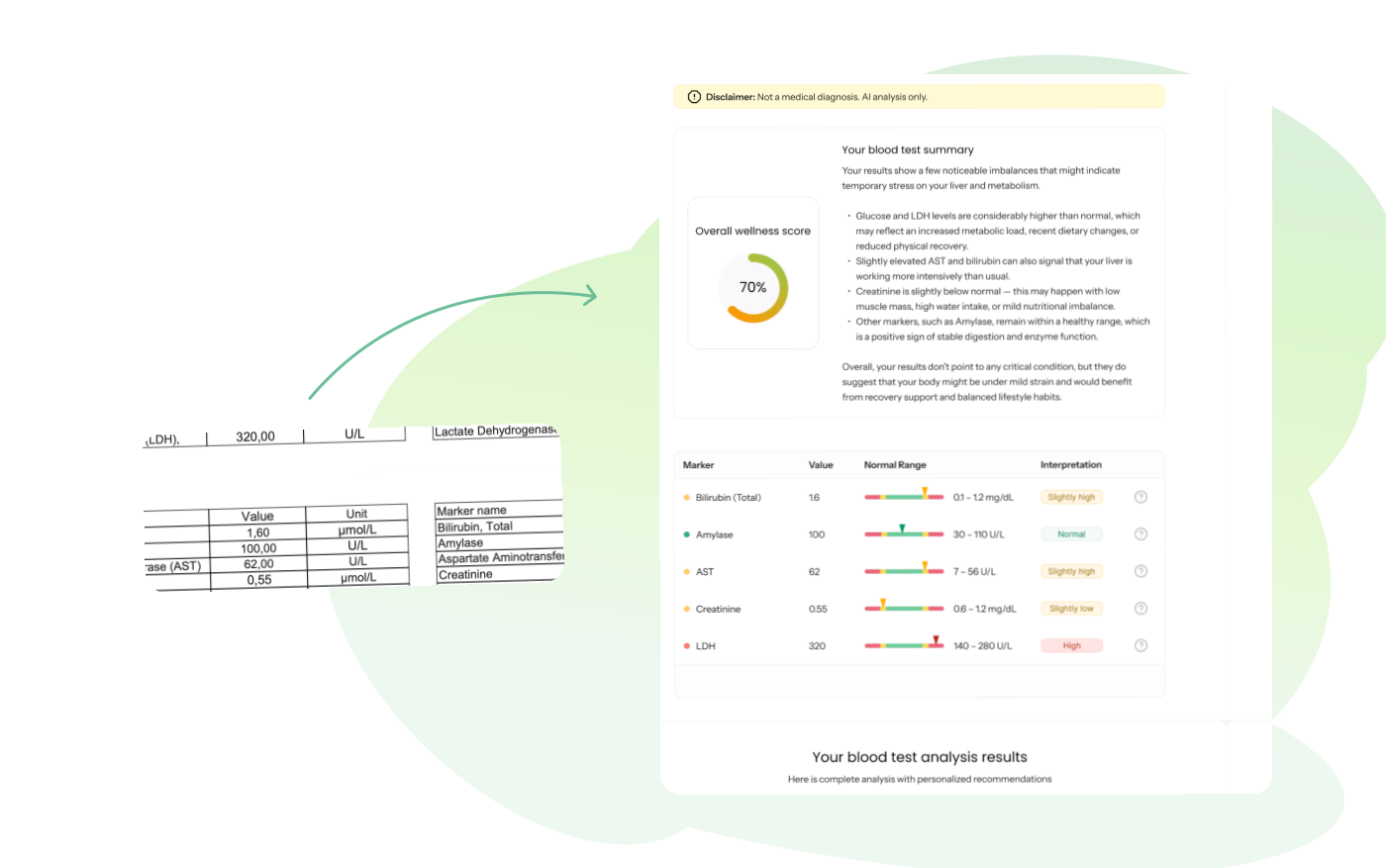
Integration Value for Digital Health Platforms
When integrated into existing healthtech, medtech or wellness platforms, the solution provides a unified view of patient laboratory data across different test types.
Doctors and healthcare providers can view all patient results in a standardized format, regardless of the original lab or country of origin. For patients, the platform enables longitudinal tracking. It allows to show how biomarkers change over time and highlighting early deviations that may require attention.
This creates the foundation for predictive analytics and personalized health journeys rather than isolated, one-time test interpretations.
Patient’s needs
Modern patients have access to more health data than ever before, yet understanding it is still one of biggest challenges. Lab results are often filled with complex medical terms, inconsistent units and unclear reference ranges. Most people receive their results without any explanation, leaving them anxious and unsure about what the numbers mean or whether they should see a doctor.
What patients truly need is a simple way to make sense of their lab results. They want to know, in plain language, whether their results are normal, if they should consult a doctor and which specialist they might need. They also want to see how their health changes over time, so they can take proactive steps toward better well-being. The goal is to give patients confidence, clarity and control over their health decisions.
Modern patients have access to more health data than ever before, but understanding this data is still a big challenge.
Lab reports are often delivered as PDFs filled with medical terminology, inconsistent units and unclear reference ranges. Most patients receive such results without any explanation, leaving them anxious and unsure whether the values are normal or if doctor’s support is required.
What patients actually need is simple:
– a clear indication of whether their results are normal
– an explanation in simple language
– guidance on whether to see a doctor and which specialist to consult
– visibility of overall health status
– possibility to track how their health markers change over time
The Lab Results Analyzer solves this needs by giving patients confidence, clarity and control over their health decisions.
Business challenge
Lab data influences nearly 70% of all medical decisions, but most healthtech, medtech and wellness companies still can’t use it effectively. The reason lies in a silent infrastructure problem. Every year, billions of lab tests are performed, but the results come in fragmented and inconsistent formats, especially across Europe.
The same biomarker can be measured in different materials such as blood, urine, saliva etc, and reported in varying units, reference ranges and formats, even within the same country. This lack of standardization makes it nearly impossible for doctors, patients and digital health platforms to build personalized, data-driven experiences. This fragmentation blocks predictive analytics, breaks longitudinal results and limits the ability to create personalized health journeys. For companies trying to solve this in-house, the process is long and costly. It often takes months of development time to map fragmented lab results, when medical teams must manually validate the results. Product launches are delayed and compliance challenges arise when storing and processing sensitive health data.
Even beyond the technical gaps, turning raw lab data into something truly valuable, for both patients and health professionals, remains one of the hardest challenges in digital health.
Discovery phase
During the discovery phase, Zenbit Tech worked closely with healthcare providers and patients to understand the depth of the problem. The research revealed that most of lab data received by digital health platforms required manual cleaning or reformatting before it could be used. Patients consistently expressed confusion to interpret their results. In the same time healthtech teams lacked standardized APIs or frameworks to integrate lab data.
This problems made it clear that the industry needed a bridge between raw medical data and meaningful, patient-friendly results.
So, Zenbit Tech developed the Lab Results Analyzer, an AI-powered web platform that transforms fragmented lab data into clear, actionable health results for both patients and healthcare providers.
The platform automatically standardizes lab results from any source from a PDF, image, or direct integration and converts them into a unified, structured format. Than LLM interprets biomarkers, detects abnormalities and explains results in simple, understandable language. Patients can instantly see if their results are within normal ranges, understand what each value means, and receive guidance on whether they should consult a doctor and which specialist to contact.
For healthcare organizations, the platform provides a reliable foundation for predictive analytics and personalized health experiences. It ensures full compliance with related regulations to offer a secure way to manage sensitive health data.
By changing fragmented lab results into structured, interoperable results, Zenbit Tech allows companies to unlock the full potential of their data. They can deploy AI models with confidence, deliver personalized health experiences, improve patient outcomes and integrate innovation across healthtech and longevity solutions.
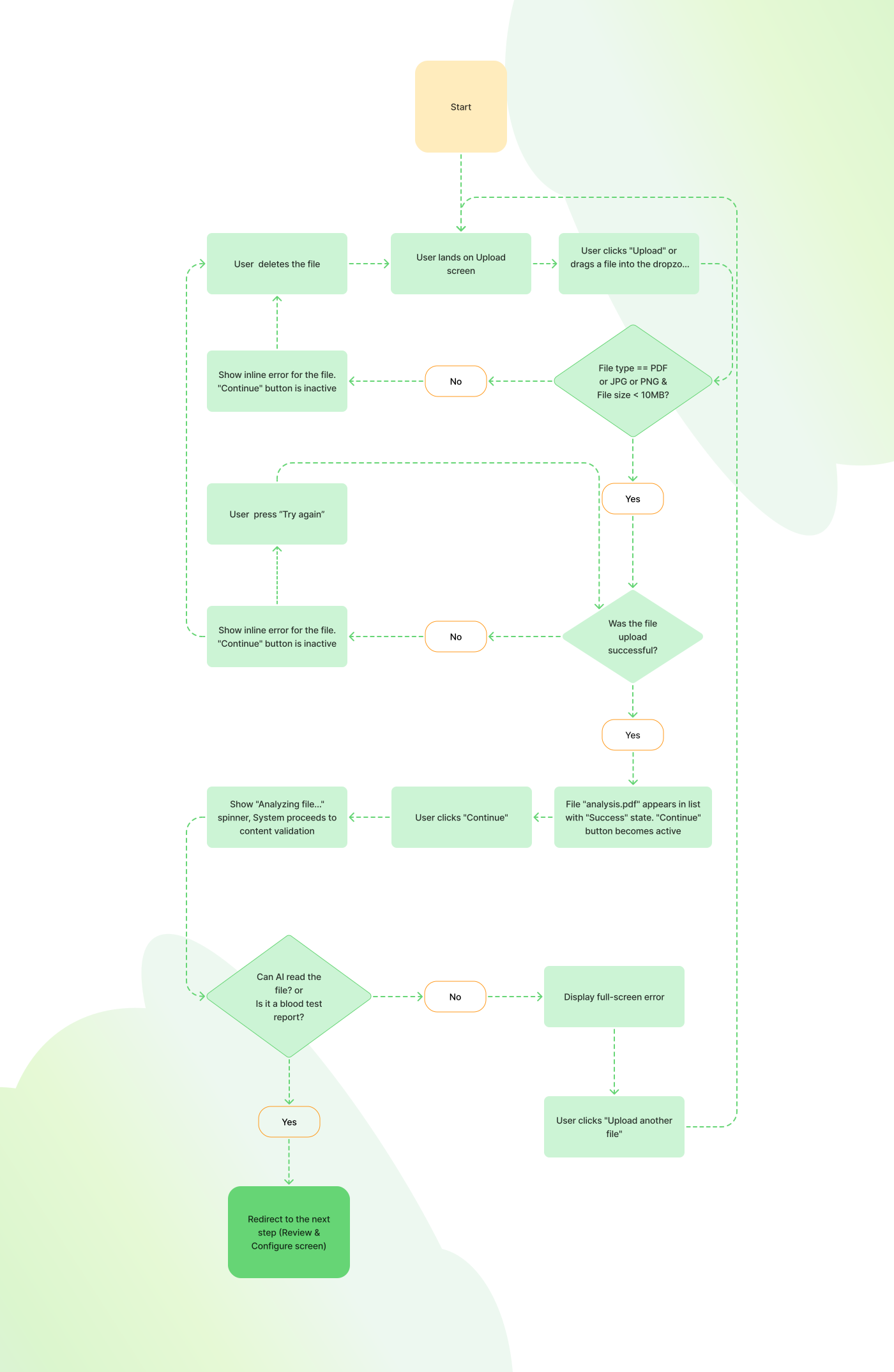
Results and Technical implementation
Lab Results Analyzer was engineered with scalability, security and interoperability as core principles. The architecture follows a modular, microservices-based design to provide flexibility and ease of integration with existing healthtech systems.
User Interface & Experience
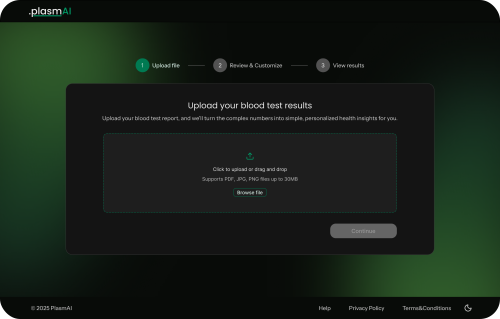
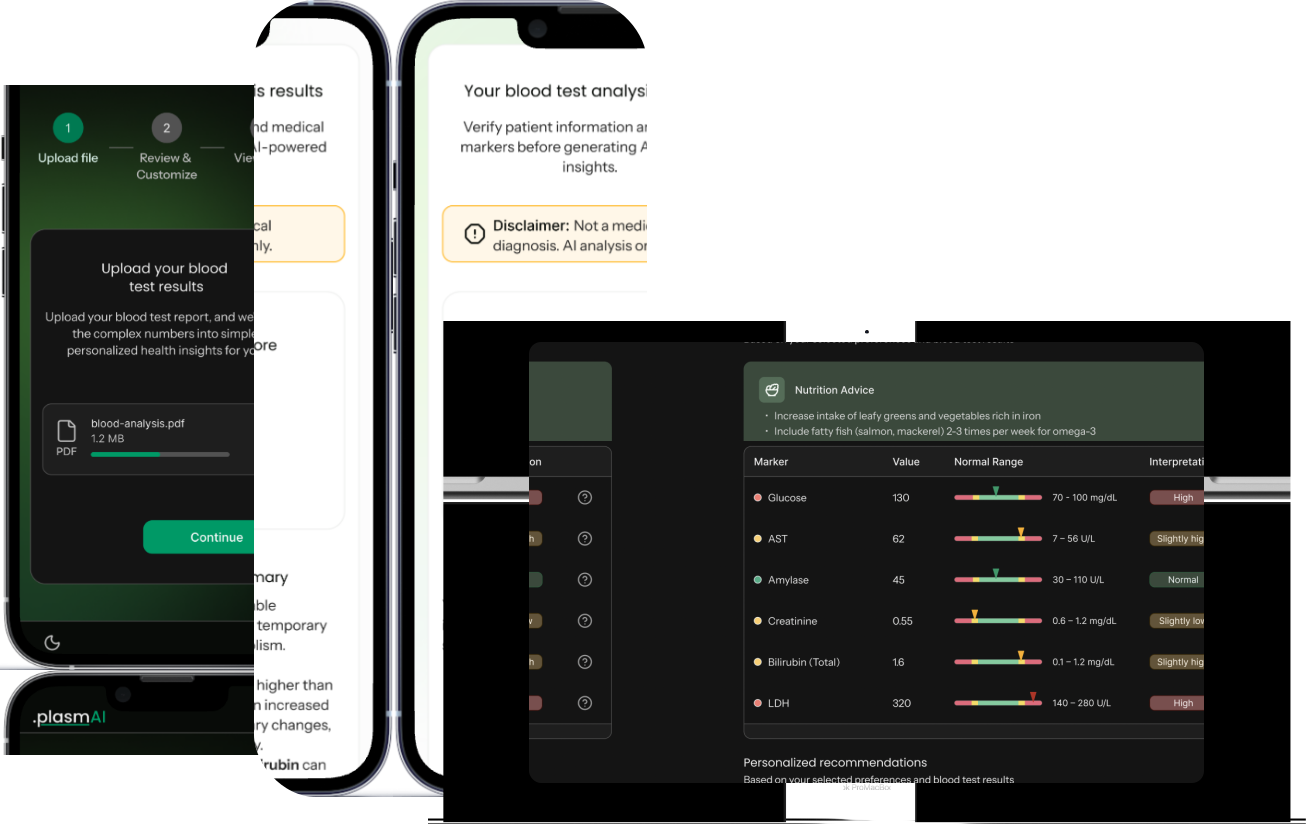
The frontend was developed using React.js and TypeScript, with a component-based architecture that ensures consistency across all screens. The interface is optimized for both desktop and mobile, enabling patients to review lab results comfortably on any device.
To support different usage contexts and accessibility needs, the UI includes Day and Night (Dark) modes.
Day mode is optimized for readability in bright environments, using high-contrast typography and neutral backgrounds.
Night mode reduces eye strain during evening use, applying darker surfaces and softened accent colors while preserving contrast for medical data visibility.
Both modes follow the same design system and automatically adapt charts, tables and alert indicators to necessary values remain clearly visible in all lighting conditions.
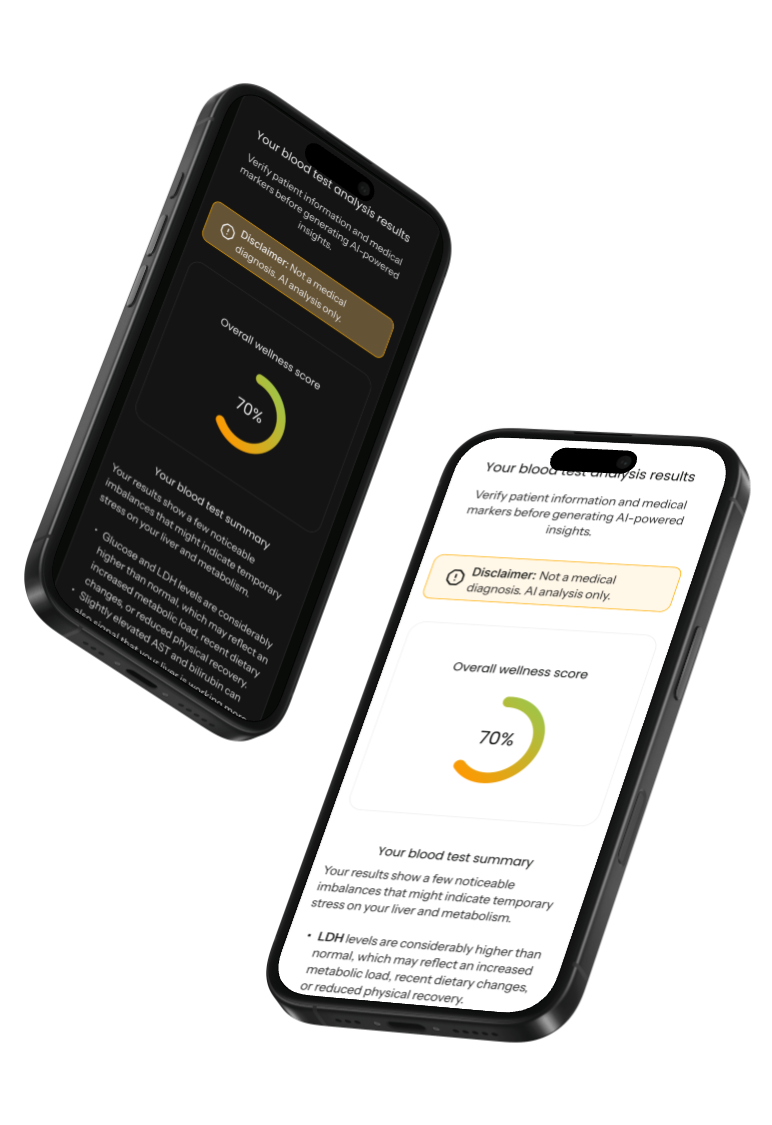
The UI focuses on clarity rather than density. Patients can:
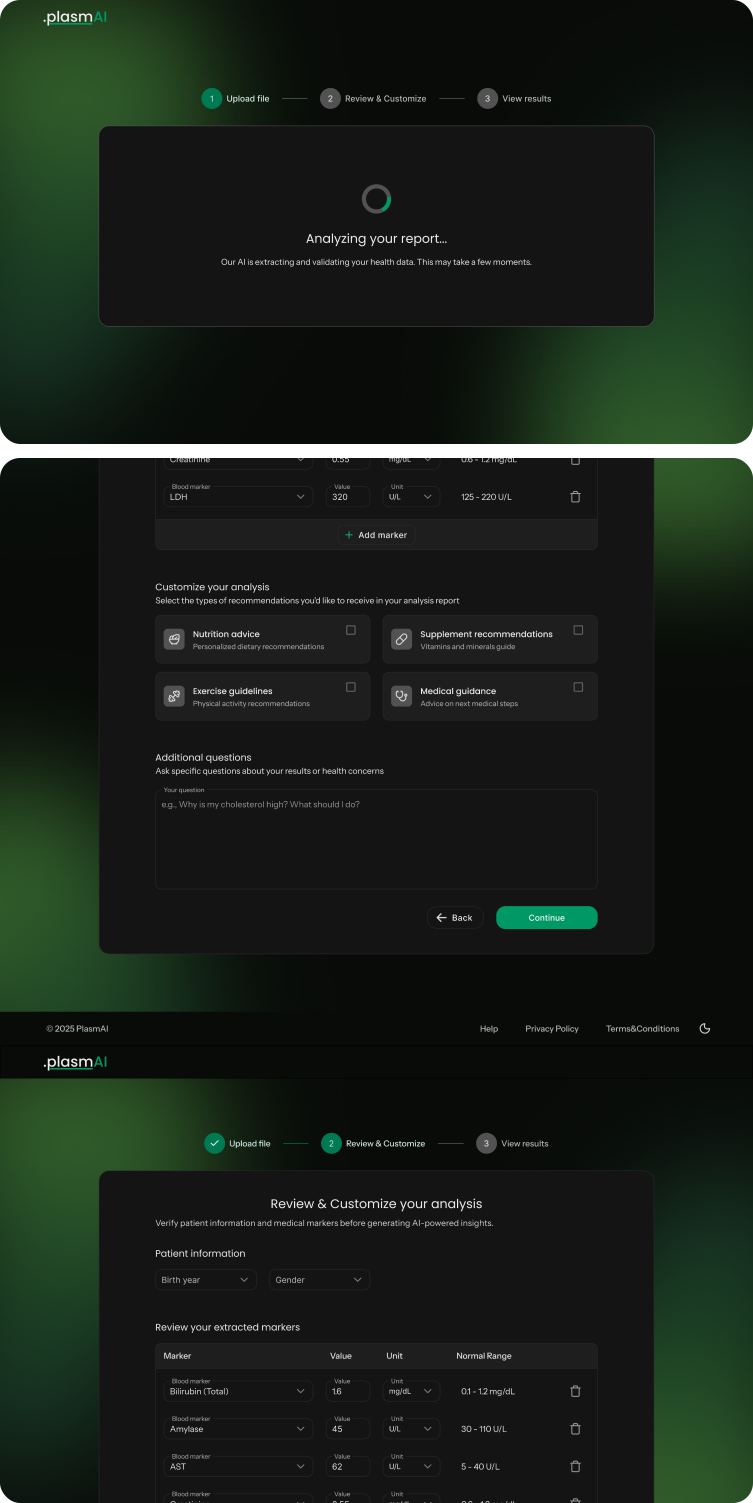
Upload lab reports in a few steps
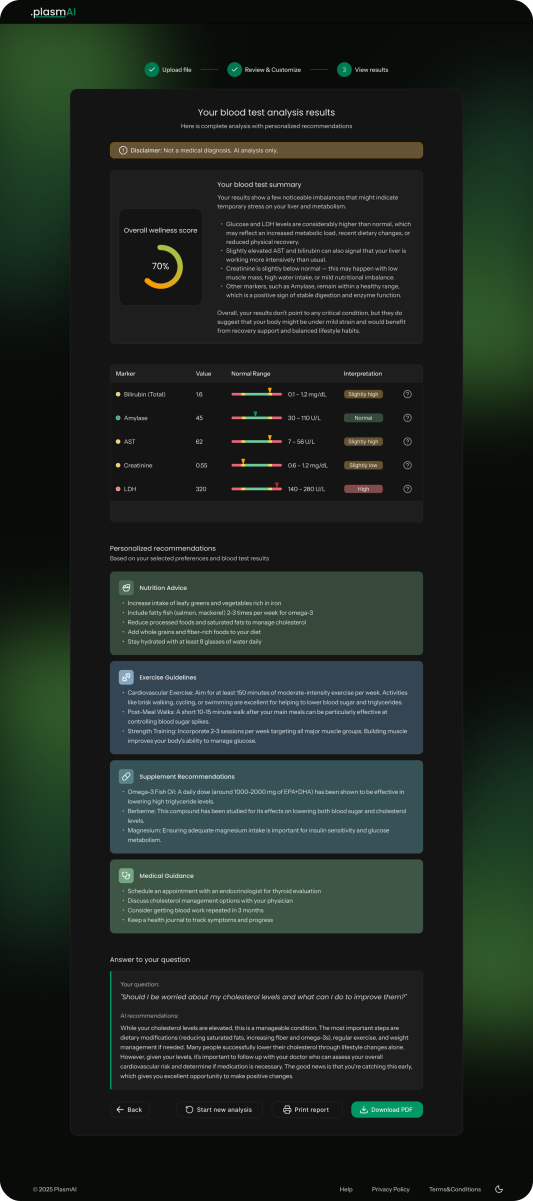
View markers grouped by test category
Clearly see normal vs abnormal values using color indicators and icons
Access short, plain-language explanations directly next to each biomarker
Trend views allow users to see overall wellness score to understand how biomarkers influence on their health.
Accessibility considerations include scalable font sizes, clear visual hierarchy and touch-friendly controls to ensure comfortable use across age groups.
Backend & AI Processing
The backend is built on Node.js with Express.js, exposing RESTful APIs responsible for secure data ingestion, processing and communication with external systems. The services manage authentication, report parsing and orchestration of AI workflows.
Medical documents are processed through an AI and machine learning layer implemented in Python, combining NLP, statistical models and rule-based logic to:
– extract biomarkers from unstructured documents
– normalize units and reference ranges
– identify abnormal values
– generate personalized explanations and guidance
This hybrid approach ensures both interpretability and clinical reliability.
Data Storage, Security & Deployment
MongoDB was selected for its ability to handle semi-structured medical data and scale horizontally. The schema supports PDFs, images, and structured lab data, enabling seamless integration from multiple sources.
The system is deployed on AWS Cloud Infrastructure, using:
AWS Lambda for serverless processing
S3 for secure document storage
EC2 for scalable compute workloads
All data transmissions are encrypted via SSL with authentication managed using JWT-based access control. Audit logs and role-based permissions ensure traceability and compliance when handling sensitive health data.
Patients only version of Lab Results Analyzer is designed not to retain patients’ sensitive health data on our platform. Processing is transient: uploaded files are accepted for parsing, analyzed, and then removed unless the integrating partner explicitly requests persistent storage. This approach minimizes exposure of PHI while still enabling meaningful analysis and PDF generation.
Reliability & Scalability
CI/CD pipelines were implemented using GitHub Actions and Docker, automating testing, containerization and deployment. Monitoring and logging are handled through AWS CloudWatch and the Elastic Stack, enabling proactive issue detection and performance tracking.
Such technical foundation allows the Lab Results Analyzer to scale efficiently, deliver real-time insights and integrate smoothly with third-party health platforms to maintain a user experience designed for clarity, comfort and trust.
Conclusion
The Lab Results Analyzer helps patients and health organizations interact with medical data. By addressing the long-standing issue of lab data fragmentation, Zenbit Tech has built the foundation for personalized, AI-powered healthcare.
Patients gain clarity and confidence in understanding their results, when healthtech companies unlock the ability to deliver smarter, data-driven experiences.
With Zenbit Tech’s solution, the future of healthcare becomes not only digital but deeply personal and built around the people it serves.


 healthcare, web platform, telemedicine, toolkit app


